Maud Delaflotte
Insects, Architects of a Sustainable Future
Collection of black soldier fly eggs inside an aviary, France, 2024
Category - Changemakers
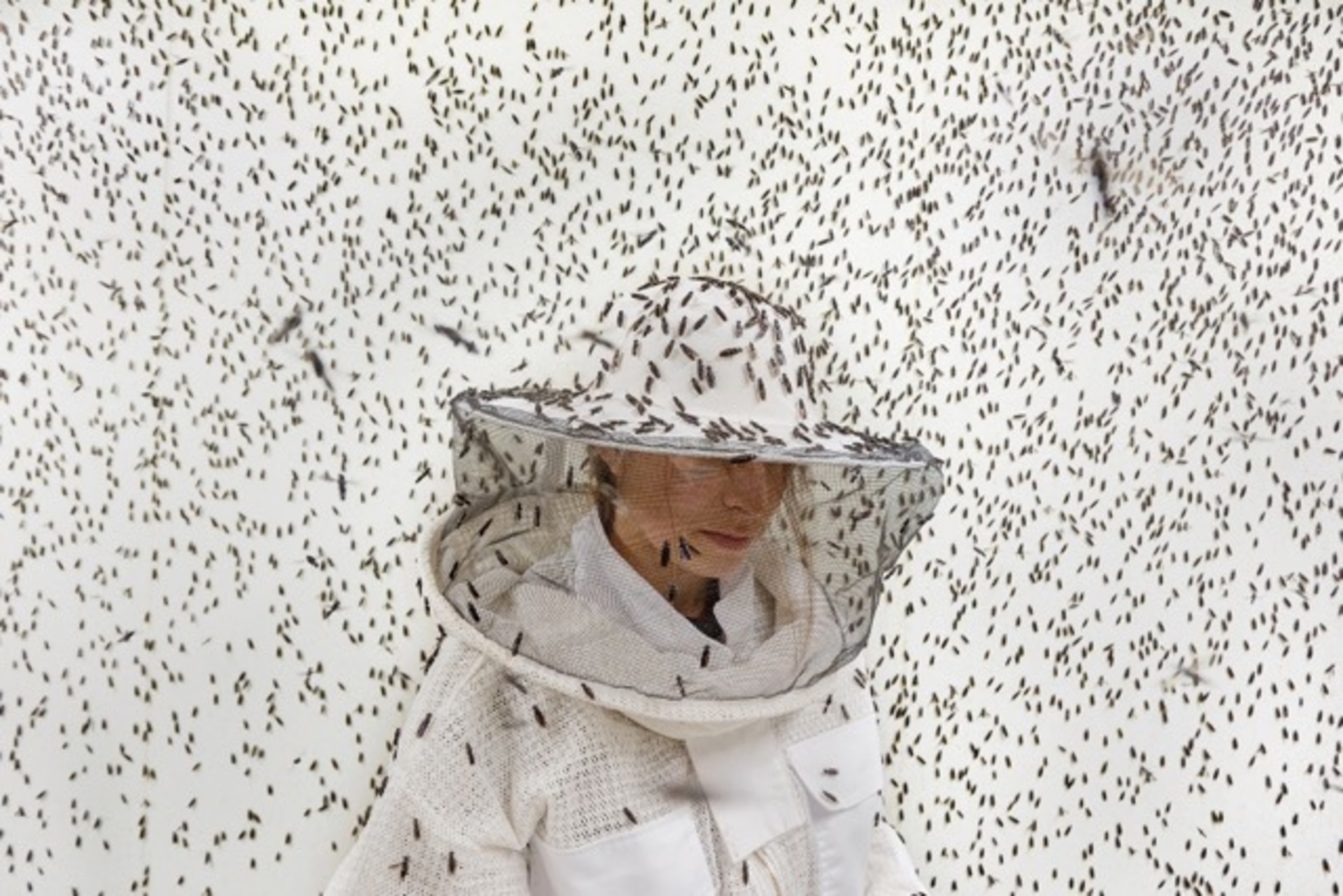
With 80% of biodiversity loss and 30% of greenhouse gas emissions linked to our food systems, insect protein is rapidly gaining attention as a sustainable alternative to traditional sources like fishmeal and soy. Sourced primarily from black soldier fly larvae (Hermetia illucens), it presents strong potential for use in animal nutrition. Global market projections estimate its value could reach $3.3 billion by 2027. The UN’s Food and Agriculture Organization (FAO) supports the development of this sector, viewing it as a key solution to meeting the growing global demand for protein while reducing environmental impact. Insect farming requires minimal land and can recycle organic waste streams; only energy consumption remains a concern. As a young and evolving industry, almost everything still needs to be built from the ground up, including production processes, business models, and market acceptance. Start-ups, often originating in research departments, now have to move beyond lab innovation to industrial production. However, with no established blueprint, each company is obliged to develop its own proprietary systems, which are often kept secret.
RUNNER-UP
23 mm f/4 Lens - 1/160 sec at f/6.3 ISO 2000